
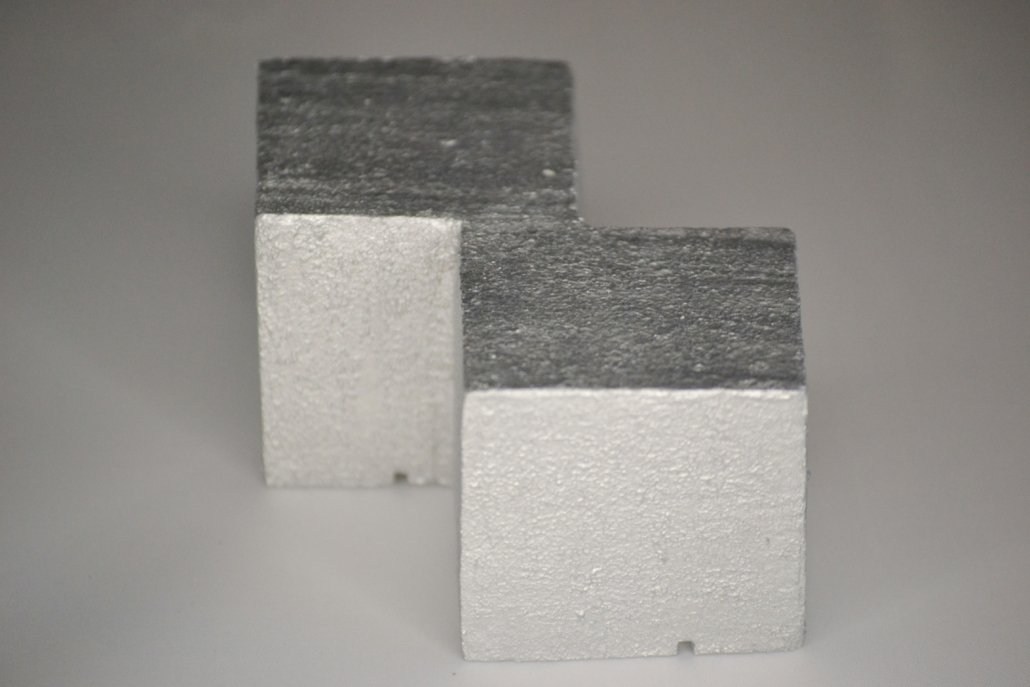
Monocrystalline vs Polycrystalline Solar Panels: Which is Best?
Choosing the right PV system for your home or commercial space is essential. Most common types of solar panels include monocrystalline and polycrystalline PV panels. Each of these types offers distinctive advantages.
The global solar market has drastically changed over the years. According to the National Renewable Energy Laboratory (NREL), polycrystalline solar panels accounted for about 60% of solar panel sales in 2015. However, the decline was seen gradually. Accounting for 50% sales in 2015 to just 11.82% of all solar panel sales in 2025, as compared to monocrystalline representing 88.18% of the market share.
Get a Quote on High-Efficiency Panels
Our team installs Tier-1 monocrystalline panels to give your home the best performance. Contact us for a free, no-obligation quote today.
Wandering why? When both fulfill the same purpose? The reason is that monocrystalline solar panels are clearly more efficient, powerful, look a lot better, and last incredibly longer. Making monocrystalline solar panels clearly lands in the top purchaser choice spot. Let’s discuss the various factors that make monocrystalline solar panels stand out in the market.
| Feature | Monocrystalline | Polycrystalline |
|---|---|---|
| Efficiency | Higher (18% – 22%+) | Lower (15% – 17%) |
| Appearance | Sleek, uniform black color. | Blue, “speckled” appearance. |
| Space Needed | Less space for the same power. Ideal for residential roofs. | More space for the same power. Often used for large, open fields. |
| Cost | Slightly higher price (but prices have become very close). | Slightly lower price. |
| Temperature Tolerance | Performs better in high heat. | Performance drops more in high heat. |
What are Monocrystalline Solar Panels
Monocrystalline solar panels consist of a single silicon crystal created from the Czochralski method. These are then sliced and divided into thin square or rectangular wafers. These wafers have rounded corners and are further arranged into rectangular arrays, interconnected with each other to form the solar panel.
These cells are connected with cables and junction boxes from the top and bottom. Additionally, the single silicon crystals give more room for electricity to roam freely. This allows monocrystalline solar panels to absorb solar energy and function with greater efficiency, as compared to their counterpart PV systems.
Get a Quote on High-Efficiency Panels
We install Tier-1 monocrystalline panels to give your home the best performance and long-term value. See our residential services.
What are Polly Crystalline Solar Panels
Polycrystalline solar panels are also called multi-crystalline or poly-silicon solar panels. These solar panels are also made from multiple silicon crystals. All those silicon crystals are melted together into a single silicon block. The block is then sliced into small and thin wafers.
Polycrystalline solar panels are generally less expensive than monocrystalline, since they have multiple crystals. Due to the large number of crystals that are not continuous causes the light to reflected unevenly.
Moreover, having a greater number of crystals creates hurdles for the electricity to flow smoothly and reducing its efficiency.
Monocrystalline and polycrystalline PV Panels Features Comparison
Most of the companies in the USA develop both monocrystalline and polycrystalline PV panels. With a 33% increase in year-over-year solar installations, individuals are rather worried about how fast they would recover the installation cost from the utilities. It all depends on the type of solar panel you choose.
This is exactly what influences your choice. Both PV systems have distinctive advantages to offer. Understanding those features helps you navigate the better choice for your home. Here’s a detailed comparison of monocrystalline and polycrystalline solar panels.
Monocrystalline PV Panels Clearly Beat the Other in Global Panel Sales
Yes, that’s truly a thing to consider. The global solar market has considerably shifted to monocrystalline solar panels. Nearly 60% of all solar panel sales in 2015 were of polycrystalline solar panels. However, the numbers had seen a decrease since then.
In 2025, the polycrystalline solar panels had a market value of only $3.8 billion, accounting for only 11.82% of the global market. As compared to a monocrystalline solar panel with a market value $202.8 billion, the difference is staggering. Indicating a high consumer trust towards monocrystalline solar panels. This clearly stems from the fact that monocrystalline solar panels are a far better technology and offer a more cost-effective investment.
Power Your Business with the Best
Higher efficiency means a faster ROI. We design and install high-performance commercial solar systems to cut your operating costs.
Energy Efficiency Showdown
According to IEA, the highest efficiency for polycrystalline solar panels ever recorded is up to 20% only. There hasn’t been much progress since the scientist first recorded its maximum efficiency to be 15.3%.
On the other hand, the monocrystalline solar panels have a greater energy efficiency. Generating up to 20-25% of all the solar energy it receives, it’s one of the most efficient panels.
The reason is that monocrystalline solar panels are made of a single crystal. Being a continuous crystal divided into fractions, solar energy has the least internal reflection. Also, it causes the electricity to flow smoothly and uniformly. Unlike polycrystalline solar panels made from several small silicon ingots with surface irregularities and causing greater reflection and lower electricity production.
Lifespan that Pays Off
A greater lifespan means you can expect to save on your electricity bills for an even longer time. Monocrystalline solar panels lead here as well. These PV systems have an annual degradation rate of only 0.3-0.5%, allowing them to last 30-40 years.
Polycrystalline panels, however, last only 25-30 years with an annual degradation of 0.5-0.8%. That’s quite a lot. Since you’re expecting it to maximize cost savings with your solar panel.
What Leads in Electricity Production
As discussed before, the single-crystal silicon ingot in monocrystalline allows electrons to move freely. The electrons don’t bump into the boundaries or defects, preventing them from scattering internally.
Exactly the result you’ve been thinking! Monocrystalline PV panels produce a lot more electricity. With a power rating of 500W to 700W. That’s 20% more power than polycrystalline solar panels that can produce only 375% of power under standard conditions. Ultimately, monocrystalline solar panels secure a convincing win in the electricity and power race too.
Affordable Power Choice
Despite all those shortcomings, polycrystalline makes a minor difference in the cost. Multi-crystal panels are budget-friendly. They cost only about $0.7 to $1 per Watt. Monocrystalline panels, on the contrary, have a price tag of $0.90 to about $1.20 per Watt.
Why such a difference? The cost usually arises in the manufacturing process. The silicon crystal in a monocrystalline solar panel involves taking out the silicon crystal from the molten silicon. This is a gentle, careful process, pulling out the crystal and avoiding any defects. The method takes time and effort, influencing the panel cost. The additional cost for wiring, inverter, and electrical protection is the same for both panels.
Temperature Coefficient
The temperature coefficient of a solar panel is the figure that defines how well the PV system performs in warm temperatures. Solar panels with a low temperature coefficient are much more efficient even in hot temperatures.
Suppose a solar panel has a temperature coefficient of -0.5% per degree Celsius. This means the panel would reduce 0.5% of its output, as the surrounding temperature increases by 1°C beyond 25°C.
The monocrystalline solar panels take the lead here too. It has a temperature coefficient of -0.3%/°C to -0.4%/°C. Polycrystalline solar panels have a temperature coefficient of -0.37 %/°C to -0.5 %/°C. This makes monocrystalline solar panels perform much better in warm temperatures, degrade more slowly, and last a lot longer.
Get a Professional Solar Consultation
Choosing the right panel is just the first step. Our solar consultants can provide a full, data-driven assessment of your home’s unique needs.
Better Return on Investment
The most essential factor while selecting a solar panel is the return on investment. This includes how many years it would first take to recover the money spent on installation and maintenance costs. Then, considering the lifespan of the panel and the changing electricity rates, how much you are expected to save throughout, from your bills.
A 4kW monocrystalline solar panel can produce up to 3,600-4,800 kWh of electricity annually. A polycrystalline solar panel, on the other hand, produces 3,120-3,840 kWh of electricity.
Based on the current USA energy rates, a person pays up to $0.17 per kWh of energy used.
Money Saved Per Year from Utilities:
4kW Monocrystalline Systems: $612/year to $816/year
4kW Polycrystalline Systems: $530.40/year to $652.80/year
The cost savings don’t just stop there. You will be making more money through federal and state-level tax incentives, rebates, and net metering. Moreover, the residential electricity cost in the USA is expected to increase from 15% to 40%, considering the inflation trends. The commercial sector expects an even higher rate. Thus, having a solar panel will benefit you even more.
Money Payback Period for Solar Panels:
Now you may wonder, how many years to get the cost all back? Well, here’s a breakdown:
- Monocrystalline solar systems: 6 to 8 years
- Polycrystalline solar systems: 7 to 9 years
Least Draining Maintenance Cost
When taking the solar panels, the installation cost doesn’t just tell the whole story. The maintenance cost must be calculated over the years. Solar panel needs to be cleaned 2 – 3 times a year. The inspection, on the other hand, must be done in at least 3 – 5 years.
The annual cleaning and inspection cost is the same for both monocrystalline and polycrystalline solar panels. You have to pay an average $200 to $500 for maintenance and cleaning. While $8 – $15 is an average rate per panel for cleaning the PV systems installed at your home or commercial space.
Curb Appeal Factor
The aesthetics make an effective impression on your roof or installed area. Polycrystalline solar panels are made from melting multiple silicon fragments together. This results in speckles and mosaic-like patterns on the surface. Moreover, these solar panels are blue in color, having a decent appeal.
Monocrystalline solar panels are slightly black in color and have a more uniform design. The cylindrical ingots with round edges and small gaps look a lot more attractive. These panels are considered to have better visual appearance than the polycrystalline solar panels.
A Glance at Monocrystalline and Polycrystalline Differences
A proper understanding of the differences between monocrystalline and polycrystalline solar panels helps users make informed decisions. This encompasses analyzing the various geographic and climatic requirements.
This table provides a quick overview for comparing the efficiency and flexibility of both panels, enabling you to make a choice that suits your needs.
| Category | Monocrystalline Solar Panels | Polycrystalline Solar Panels |
| Market Share (Global Sales) | Completely dominated the global market since 2021, accounting for 100% of sales. | Once held 60% in 2015, declined to 50% in 2018, and completely disappeared by 2021 (0% market share). |
| Energy Efficiency | 20–25% efficiency; the most efficient panels available. | 18–20% efficiency; max recorded efficiency was 20.4% in 2019. |
| Lifespan & Degradation Rate | 30–40 years lifespan; degrades 0.3–0.5% annually. | 25–30 years lifespan; degrades 0.5–0.8% annually. |
| Aesthetics and Appeal | Well-organized cylindrical ingots with a black color and modern elegance | Speckled patterns due to the melting of multiple silicon fragments |
| Color & Structure | Black panels, made using the Czochralski method, form a single crystal structure. | Blue panels, made from multiple silicon crystals, cause light scattering and reduced efficiency. |
| Power Output (Per Panel) | 500W–700W or more, depending on model. | Around 345W; typically 20% less powerful. |
| Energy Generation (4 kW System) | 3,600–4,800 kWh per year. | 3,120–3,840 kWh per year. |
| Annual Utility Savings (Based on 2025 Electricity Rates) | $612–$816/year in savings. | $530–$653/year in savings. |
| Temperature Coefficient | –0.3 %/°C to –0.4 %/°C (better performance in heat). | –0.37 %/°C to –0.5 %/°C (slightly less efficient in warm climates). |
| Cost per Watt | $0.90–$1.20 per watt (higher due to complex production). | $0.70–$1.00 per watt (cheaper to produce). |
| Return on Investment (ROI) | The money Payback period: 6–8 years. | Money. Payback period: 7–9 years. |
| Maintenance Cost | Annual cleaning/inspection: £100–£200. Professional cleaning: £4–£15 per panel (twice a year). Total 25-year cost: £2,500–£5,000. | Similar range, but efficiency loss over time may require more frequent maintenance. |
| Overall Financial Advantage | Higher upfront cost but best long-term returns due to higher efficiency, longer lifespan, and greater annual savings. | Lower initial cost but shorter lifespan and lower annual output make it less profitable long-term. |
What to Choose among Monocrystalline and Polycrystalline Solar Panels
Choosing the best solar panel type for your home? Monocrystalline Solar panels come out to be victorious among both. The aesthetic design, high efficiency, and better return on investment make it truly stand out. Even if the price tag seems a bit high, it won’t affect you much. Since you will be returning every penny in 6-8 years maximum, and expect to save on your electricity bills for 30-40 years. That’s clearly a jackpot, you can’t miss.
On the other hand, polycrystalline solar panels with the obvious cons have made it a less likable option in the market. The sales have considerably decreased over the years. Additionally, with far less initial installation cost, you can expect to wait 7-9 years till these PV cells pay back it all. latest cell efficiency records
Prefer to Email Us?
Send us your questions about monocrystalline panels or attach your utility bill, and one of our solar consultants will reply with a free, detailed analysis.
Final Thoughts
The solar market has seen a rapid increase over the years. With high incentives and utility savings, the market saw a glorious bloom with a value of $202.8 billion in just 2025. It doesn’t just stop there. The solar market value is expected to reach $229.5 billion by 2025 and a staggering $700 billion by 2036. That means an increase of 13.26% in the market value till 2036.
In this rapidly evolving solar market, making the perfect choice is difficult. Well, Solar Panel Installers doesn’t just leave you wandering around. We help you make the best choice for your home, commercial, or industrial solar needs across the USA.
So take your next step and connect with the solar panel installers’ expert team, helping you adapt with crucial PV technology. solar photovoltaic cell basics
FAQs
Why is a monocrystalline solar panel more advantageous than a polycrystalline solar panel?
+
Monocrystalline solar panels are generally superior to polycrystalline solar panels because of their strong features, such as higher efficiency, greater durability in hot conditions, and higher electricity production from the same amount of sunlight absorbed.
Which type of solar panel is best for home use?
+
For domestic purposes, monocrystalline solar panels are considered the best choice because they produce more power per square meter with the highest efficiency. They can achieve more than 22 percent efficiency, and supply more than 300 watts (W) of power capacity, even reaching to 400W. Polycrystalline panels, on the other hand, are cheap, less efficient, and require more space. Hence, they are suitable only if the roof space is abundant.
Is a monocrystalline solar panel better for commercial use?
+
Absolutely! Monocrystalline solar panels are indeed a better option for commercial applications. These PV systems take less space, are far more efficient, and deliver a high return on investment as compared to polycrystalline solar panels.
What’s the next emerging PV technology?
+
A perovskite solar cell (PSCs) seems to be the next big step towards evolving solar technology. According to the National Renewable Energy Laboratory, a single junction perovskite cell is recorded to deliver an efficiency of 26.7%. This is far ahead of both monocrystalline and polycrystalline solar panels.
Which lasts longer, monocrystalline or polycrystalline?
+
In comparison to polycrystalline, monocrystalline solar panels have a longer lifespan. Monocrystalline panels normally last between 30 to 40 years and have a lower degradation rate of 0.3-0.5 percent/ year, implying that they are still able to retain much of their original performance with age. In contrast, polycrystalline has a lower life span and a high degradation rate.

Leave a Reply
Want to join the discussion?Feel free to contribute!